

AI in healthcare has moved past the hype cycle. The question is no longer whether AI will transform healthcare — it’s which use cases are delivering measurable value today, which are approaching production readiness, and which still need more evidence. This guide covers the 15 most impactful AI use cases in healthcare as of 2026 — organized by clinical impact, technical maturity, and implementation complexity.
Clinical AI
1. Medical Image Analysis
The most mature healthcare AI category — over 500 FDA-cleared AI algorithms for radiology alone. AI detects lung nodules on CT, identifies fractures on X-ray, screens for diabetic retinopathy from fundus images, flags potential strokes on head CT, and assists mammography interpretation. These tools integrate with PACS and DICOM workflows, analyzing images and presenting findings to radiologists through prioritized worklists and overlay annotations.
2. Ambient Clinical Documentation
AI that listens to patient-provider conversations and generates clinical documentation — SOAP notes, assessment and plan sections, orders, and coding suggestions. Products like Nuance DAX, Abridge, and DeepScribe use NLP and large language models to capture the clinical encounter, reducing documentation burden by 50%+ for many providers. Integration with the EHR is critical — generated notes must flow into the patient’s chart for review and finalization.
3. Clinical Decision Support
AI-powered CDS that goes beyond rule-based alerts. Machine learning models predict sepsis onset from vital sign trends, identify patients at risk for deterioration, recommend medication adjustments based on pharmacogenomic profiles, and surface evidence-based treatment pathways. These tools integrate with EHR workflows through CDS Hooks, delivering recommendations at the point of care.
4. Pathology and Histology
AI analyzing digitized pathology slides — detecting cancer cells, grading tumor severity, measuring biomarker expression, and identifying morphological patterns that predict treatment response. Digital pathology AI is accelerating diagnosis, reducing inter-observer variability, and enabling quantitative analysis that human review alone can’t achieve consistently.
5. Early Warning and Deterioration Prediction
Real-time AI models monitoring vital signs, lab results, and RPM data to predict clinical deterioration — sepsis, respiratory failure, cardiac arrest, ICU transfer — hours before traditional assessment methods would catch it. These models run continuously in the background, alerting care teams through EHR-integrated notifications.
6. Drug Interaction and Adverse Event Prediction
AI models analyzing patient medication lists, genomic profiles, lab results, and comorbidities to predict drug interactions and adverse events with greater specificity than rule-based checking. Reducing alert fatigue while maintaining safety — by suppressing low-risk alerts and escalating truly dangerous combinations.
Administrative AI
7. Medical Coding Automation
AI that reads clinical documentation and suggests ICD-10 diagnosis codes and CPT procedure codes — reducing coder workload and improving coding specificity. NLP models extract clinical concepts from progress notes, operative reports, and discharge summaries, then map them to appropriate codes. Human coders validate AI suggestions rather than coding from scratch.
8. Prior Authorization Automation
AI streamlining the prior authorization process — predicting which services will require auth based on historical patterns, auto-populating authorization forms with clinical data from the EHR, predicting approval likelihood, and routing complex cases for human review. Combined with Da Vinci PAS FHIR APIs, AI can significantly reduce prior auth processing time.
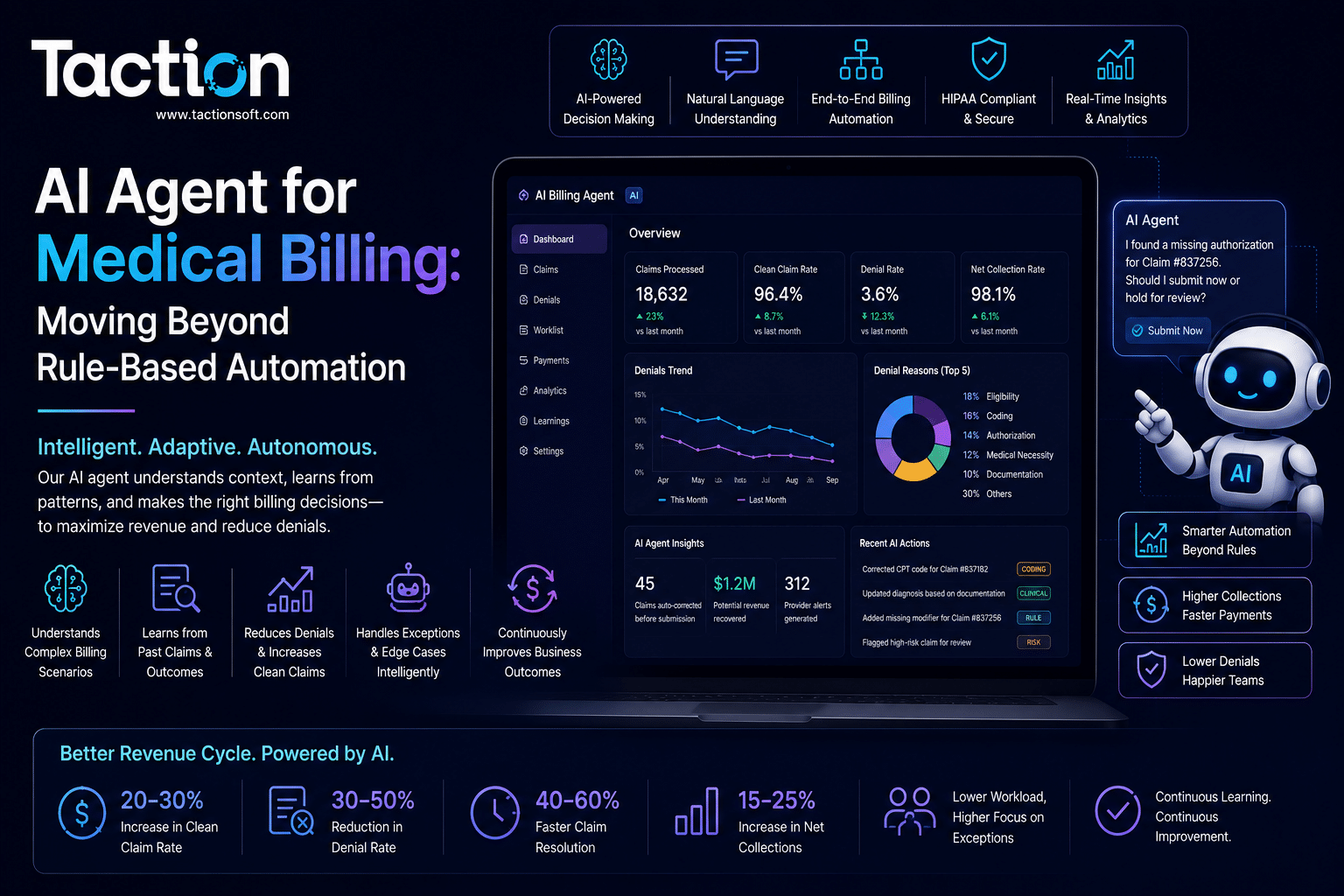
9. Claims Denial Prediction
Machine learning models analyzing claim characteristics (diagnosis/procedure combinations, payer rules, documentation completeness, historical denial patterns) to predict which claims will be denied before submission. Flagged claims are routed for correction, reducing denial rates and accelerating revenue cycle performance.
10. Patient Scheduling Optimization
AI optimizing appointment scheduling — predicting no-shows, overbooking intelligently, matching appointment duration to visit complexity, and reducing scheduling gaps. Models trained on historical scheduling patterns, patient demographics, and appointment type improve utilization rates and reduce wait times.
Population Health and Research AI
11. Risk Stratification
AI models scoring patients for risk of hospitalization, ED visits, readmission, and high cost — incorporating clinical data, claims data, SDoH factors, and behavioral signals. More accurate than traditional regression-based risk models, population health AI enables targeted interventions for patients most likely to benefit.
12. Clinical Trial Matching
AI comparing patient clinical and molecular profiles against clinical trial eligibility criteria — identifying potential trial matches that manual review would miss. NLP extracts relevant clinical attributes from unstructured EHR data, and matching algorithms evaluate eligibility across thousands of active trials.
13. Drug Discovery and Repurposing
AI accelerating drug discovery by predicting molecular interactions, identifying drug candidates, and discovering new uses for existing medications. While not a clinical deployment use case, drug discovery AI is reshaping the pharmaceutical pipeline and will increasingly impact which treatments healthcare systems deliver.
Patient-Facing AI
14. Symptom Triage and Virtual Health Assistants
AI-powered chatbots and virtual assistants that help patients assess symptoms, determine urgency, and navigate to appropriate care — primary care, urgent care, or emergency department. Healthcare chatbots must be designed carefully to avoid inappropriate reassurance or missed red flags.
15. Medication Adherence and Behavioral Nudging
AI analyzing patient behavior patterns — medication fill data, RPM readings, portal engagement, appointment attendance — and delivering personalized interventions (reminders, educational content, motivational messaging) through mHealth apps and patient portals. Behavioral AI improves adherence for chronic conditions where patient engagement directly determines outcomes.
Implementation Considerations
Regulatory compliance. AI that meets the definition of SaMD requires FDA clearance. ONC requires algorithm transparency in certified health IT. Know your regulatory obligations before deployment.
Bias testing. Healthcare AI must be tested for demographic bias — performance disparities across race, ethnicity, age, gender, and socioeconomic status. Models trained on non-representative data can perpetuate or amplify existing health disparities.
Clinical validation. AI performance in a research paper doesn’t equal performance in your clinical environment. Validate models against your patient population, your data quality, and your clinical workflows before production deployment.
EHR integration. AI tools that exist outside the clinical workflow — requiring separate logins, separate screens, or manual data transfer — won’t be adopted. Integrate through SMART on FHIR, CDS Hooks, and embedded EHR views.
How Taction Helps
At Taction, our team builds and integrates AI-powered healthcare applications — from clinical decision support to administrative automation and population health analytics.
- Clinical AI development — We build AI-powered clinical tools with FDA-aware design controls, EHR integration, and bias testing frameworks.
- NLP and documentation AI — We build NLP-powered text extraction, coding assistance, and documentation tools integrated with EHR workflows.
- AI integration with EHR — We connect AI tools to EHR platforms through SMART on FHIR, CDS Hooks, and FHIR APIs — putting AI insights where clinicians work.
- Population health AI — We build risk stratification, care gap prediction, and utilization forecasting models powered by clinical, claims, and SDoH data.
- AI governance — We help organizations build AI governance frameworks — bias testing, performance monitoring, regulatory compliance, and clinical validation processes.