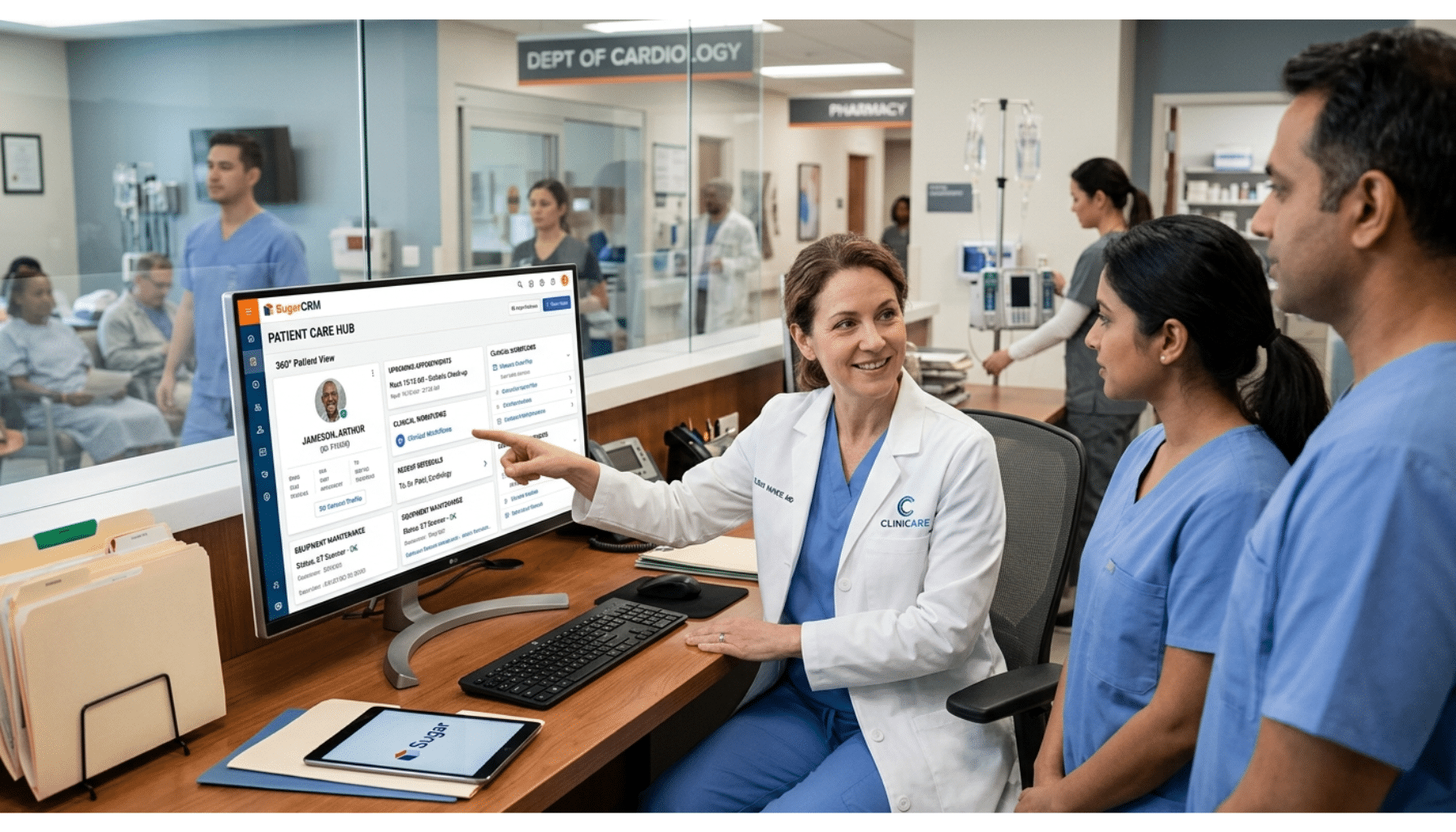
SugarCRM is a popular choice for healthcare organizations that want a CRM they can genuinely tailor to their workflows — and, notably, one they can run on their own infrastructure if they want to control where data lives. Those two traits, deep customizability and deployment flexibility, are exactly what healthcare CRM needs, because clinical and patient-engagement workflows rarely fit a generic sales CRM, and many healthcare organizations care a great deal about where PHI is hosted. But as with any CRM, implementing SugarCRM for healthcare means more than installing it: you have to configure it for compliance and shape it around your real workflows. This guide explains why SugarCRM fits, the HIPAA realities, and how to approach the implementation.
A scope note: this is an educational and technical guide, not legal advice. HIPAA compliance involves legal and organizational determinations that rest with your compliance team and counsel; we cover the technical and practical side.
Why SugarCRM for Healthcare
Two characteristics make SugarCRM a strong healthcare candidate. First, customizability: SugarCRM is built to be tailored extensively — custom modules, fields, and workflows — so you can model healthcare-specific concepts (patients, referrals, care coordination, intake) rather than bending a sales-oriented data model to fit. Second, deployment flexibility: SugarCRM offers both cloud and on-premises/self-hosted options, and the ability to self-host is a genuine advantage for organizations that want direct control over where PHI resides and how the environment is secured. Together, these let healthcare organizations build a CRM that fits their workflows and their data-governance posture, which is often the deciding reason teams choose SugarCRM over more rigid, cloud-only platforms.
A Note on Editions and SuiteCRM
It is worth clearing up a common point of confusion. SugarCRM today is a commercial product, available in editions for sales, service, and marketing use. Historically there was a SugarCRM Community Edition that was open source, but that open-source edition was discontinued years ago; the open-source lineage continues in SuiteCRM, a fork derived from the older Sugar codebase and maintained independently. So if you are weighing “open-source SugarCRM,” what you are likely looking at is SuiteCRM, while “SugarCRM” proper refers to the commercial editions. Both are tailorable platforms used in healthcare; the right one depends on your needs, budget, and support expectations. Confirm current editions and capabilities directly, since product lineups evolve.
The HIPAA Reality With SugarCRM
The same truth that applies to every CRM applies here: SugarCRM is not “HIPAA-compliant” out of the box, because compliance comes from configuration, practices, and the right agreements, not from a label (we cover this fully in our HIPAA-compliant CRM guide). What SugarCRM gives you is a platform you can configure to meet the HIPAA technical safeguards and tailor for compliant use. The deployment choice changes the compliance picture in an important way: if you self-host, you control the environment where PHI lives and you own the safeguards and hosting directly; if you use a vendor-hosted/cloud option where SugarCRM processes PHI on your behalf, the Business Associate Agreement question comes into play and you should confirm the vendor’s terms (see our Business Associate Agreements guide). Either way, the HIPAA safeguards have to be configured and operated.
Deployment Decision: Cloud vs. On-Premises
Because SugarCRM supports both, the deployment decision is a real one with compliance implications. On-premises/self-hosted gives you maximum control — you decide exactly where PHI is stored, how the infrastructure is secured, and who has access, which appeals to organizations with strict data-residency or control requirements; the trade-off is that you own the operational and security burden. Cloud/vendor-hosted reduces that operational burden but means the vendor is handling PHI on your behalf, bringing the BAA and the vendor’s security posture into scope. Neither is universally right; the choice follows your data-governance requirements, internal capacity, and risk tolerance, and it is one of the first decisions to make because it shapes much of the rest of the implementation.
Implementation Considerations
Customization for Healthcare Workflows
SugarCRM’s strength is customization, and healthcare implementations lean on it heavily. Using Studio and Module Builder, you can create custom modules and fields and adapt the data model to healthcare concepts — patient or member records, referrals, care coordination, intake and outreach — so the CRM reflects how your organization actually works rather than a generic sales pipeline. Getting this data model right, shaped around your real workflows, is the foundation of a useful healthcare CRM.
Access Control and Field-Level Security
PHI demands tight access control, so configure role-based access and field-level security so users see only the data they need under the minimum-necessary principle. SugarCRM’s role and security model lets you restrict sensitive fields and records to appropriate roles rather than exposing all patient data broadly — an essential part of compliant configuration.
Audit Logging and Encryption
Implement the HIPAA technical safeguards: audit logging of access to PHI, and encryption of data at rest and in transit. These mirror the Security Rule’s technical safeguards (see our technical safeguards explainer) and are non-negotiable for any system holding PHI, configured according to your deployment.
Workflow Automation
SugarCRM’s process automation (SugarBPM) lets you automate healthcare workflows — intake processes, follow-up sequences, referral routing, outreach — in a controlled, auditable way. Automation is where a healthcare CRM delivers a lot of its operational value, provided it is built to respect access controls and the rules around using PHI.
EHR and System Integration
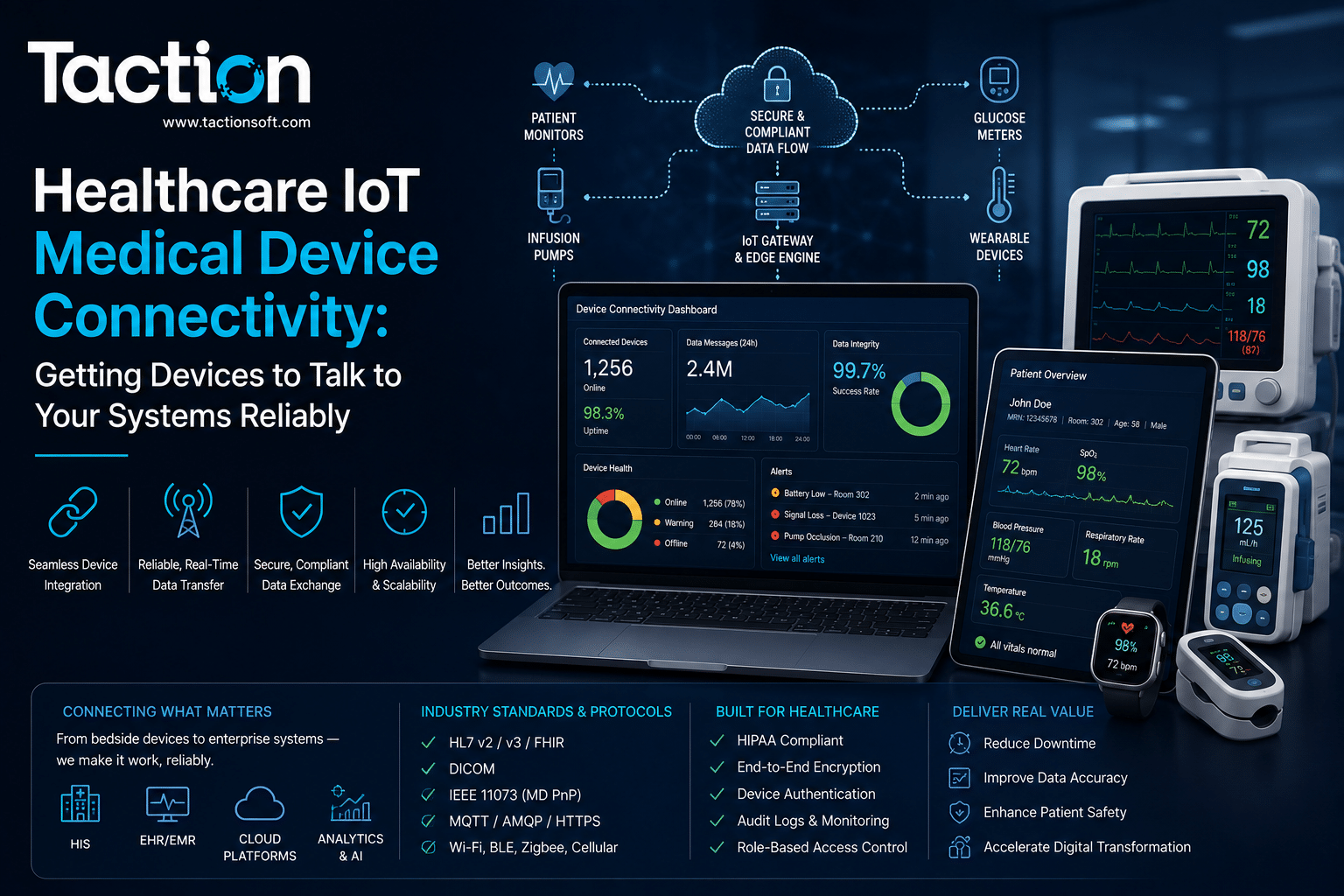
Healthcare CRMs rarely stand alone, and SugarCRM’s REST API supports integration with EHRs and other systems. Connecting the CRM to clinical systems — often via FHIR or HL7 — lets patient and clinical context flow appropriately, and those integrations must be built securely as part of your compliance surface. See our FHIR API development and HL7 integration practices.
Secure Communications
As with any CRM, treat communication features carefully: ensure any patient-facing email or messaging used with PHI runs through HIPAA-safe channels, and be mindful of the restrictions on using PHI for marketing. Communication is a common compliance pitfall, so verify each channel rather than assuming it is safe.
Data Migration
Most SugarCRM implementations involve migrating existing data — contacts, accounts, history, and sometimes patient data — into the new system. Migrate securely, mapping and validating the data and protecting PHI throughout, the same discipline that applies to any healthcare data move (see our healthcare data migration practice).
A Practical Implementation Approach
Decide the Deployment Model
Choose cloud or on-premises/self-hosted based on your data-governance requirements, internal capacity, and risk tolerance, since it shapes the rest.
Plan Compliance and BAA Posture
Determine your HIPAA approach for the chosen deployment — safeguards you will configure, and the BAA position with the vendor if cloud-hosted — with your compliance team.
Model and Customize for Healthcare Workflows
Use Studio and Module Builder to build the data model and modules around your real healthcare workflows.
Configure Security Safeguards
Set up role-based and field-level security, audit logging, and encryption appropriate to your deployment.
Build Integrations
Integrate with EHRs and other systems via the REST API and FHIR/HL7, securing every connection that carries PHI.
Handle Communications and Migration
Configure HIPAA-safe communications, mind marketing restrictions, and migrate existing data securely with mapping and validation.
Test and Govern
Test the configured system thoroughly and establish ongoing governance, since compliant configuration must be maintained over time.
The Honest Boundaries
Implementing and configuring SugarCRM well is necessary, but HIPAA compliance also depends on compliant operating practices, the right agreements, and your broader compliance program — risk analysis, policies, training. The CRM is one component, not the whole of compliance, and the legal determinations rest with your compliance team and counsel. We provide the technical implementation and configuration; we do not make your organization compliant by ourselves, and we are clear about that boundary rather than implying a product or a setup removes your responsibility.
How Taction Helps
We implement SugarCRM for healthcare end to end — choosing and standing up the right deployment (cloud or self-hosted), customizing the data model and modules for your healthcare workflows with Studio and Module Builder, configuring role-based and field-level security, audit logging, and encryption, automating workflows with SugarBPM, integrating with EHRs and other systems via the REST API and FHIR/HL7, and migrating existing data securely. With healthcare engineering depth, ISO 27001-certified security, and PHI handled under a signed BAA, we work alongside your compliance team and counsel, who own the legal determinations. Our healthcare CRM and HIPAA-compliant development practices, within our healthcare software work, cover the full scope.
Related reading: HIPAA-Compliant CRM: What to Look For · Business Associate Agreements: A Developer’s Guide
Frequently Asked Questions
Why choose SugarCRM for healthcare?
Two reasons stand out: deep customizability, so you can model healthcare workflows (patients, referrals, care coordination) rather than forcing a sales data model to fit; and deployment flexibility, including a self-hosted option that gives you direct control over where PHI lives and how the environment is secured. That combination fits healthcare’s workflow and data-governance needs well.
Is SugarCRM HIPAA-compliant?
Not out of the box — like any CRM, SugarCRM becomes HIPAA-compliant through configuration, compliant practices, and the right agreements, not through a label. It provides a platform you can configure to the HIPAA safeguards. If you self-host, you control the PHI environment directly; if cloud-hosted, confirm the vendor’s BAA terms. Either way, the safeguards must be configured and operated.
What’s the difference between SugarCRM and SuiteCRM?
SugarCRM today is a commercial product in several editions. The old open-source SugarCRM Community Edition was discontinued, and the open-source lineage continues in SuiteCRM, an independently maintained fork of the older Sugar codebase. So “open-source SugarCRM” usually means SuiteCRM, while “SugarCRM” refers to the commercial editions. Confirm current editions directly, as product lineups change.
Should we host SugarCRM in the cloud or on-premises?
It depends on your data-governance requirements, internal capacity, and risk tolerance. On-premises/self-hosted maximizes control over where PHI lives and how it is secured, at the cost of owning the operational burden. Cloud reduces that burden but brings the vendor’s BAA and security posture into scope. The choice shapes much of the implementation, so decide it early.
How do we customize SugarCRM for healthcare workflows?
Using Studio and Module Builder to create custom modules and fields and adapt the data model to healthcare concepts — patients, referrals, intake, care coordination — and SugarBPM to automate healthcare processes. The goal is a CRM that reflects how your organization actually works, built to respect access controls and PHI rules.
Can SugarCRM integrate with our EHR?
Yes — SugarCRM’s REST API supports integration with EHRs and other systems, commonly via FHIR or HL7, so patient and clinical context can flow appropriately. Those integrations must be built securely as part of your compliance surface, with PHI protected in transit and access controlled.
Implementing SugarCRM for healthcare? Schedule a free consultation →
This article is an educational and technical guide, not legal advice. Reviewed by Taction Software’s healthcare engineering team. ISO 27001-certified information security management. HIPAA compliance involves legal and organizational determinations that rest with your compliance team and counsel; PHI is handled under a signed BAA.