In today’s digital economy, the businesses that succeed are those that innovate quickly, scale without friction, and operate with precision. Yet many organizations still rely on outdated tools, fragmented systems, and generic software that fails to support how they actually work. As industries evolve and customer expectations continue to rise, dependence on off-the-shelf solutions becomes an increasingly serious limitation.
This is where custom software product development emerges as a true breakthrough differentiator.
Custom-built systems give businesses complete control over workflows, automation, integrations, user experience, data ownership, performance, and long-term scalability. Instead of forcing operations to adapt to rigid platforms, custom software is designed to align precisely with your business model and strategic goals. Delivering this level of alignment requires a reliable software development service that understands both technology and real-world business processes.
From AI-driven healthcare platforms and enterprise automation engines to logistics management tools, CRM ecosystems, SaaS products, fintech applications, and internal operational systems, businesses across the U.S. are rapidly adopting custom software development to remain competitive and future-ready. When combined with modern mobile app development services, these solutions also ensure seamless, consistent experiences across web and mobile environments.
This guide explains why custom product development is gaining momentum, the tangible business benefits it delivers, what the end-to-end development journey looks like, and why partnering with the right software development service provider is critical to long-term success.
Build Your Custom BIM Solution
Why Businesses Are Moving Toward Custom Software Product Development
Every organization eventually experiences the same pain points:
Inefficient workflows
Data stored in multiple disconnected systems
Rising subscription costs for multiple SaaS tools
Poor visibility into operations
Slow decision-making
Inability to scale or customize
Compliance restrictions
Manual processes that drain time and revenue
At this point, leaders begin realizing that technology must adapt to the business—not the business to the technology.
Custom software product development empowers companies with:
Complete ownership of features
You build exactly what you need, nothing unnecessary.
Future-ready scalability
Your system grows as your business grows.
Integration with all existing tools
No more silos between CRMs, ERPs, EHRs, analytics tools, or cloud platforms.
Cost efficiency
No more expensive per-user SaaS fees.
Competitive differentiation
Your competitors can’t buy your technology—it’s unique to your vision.
This is why custom systems outperform generic platforms every single time.
Get a Free BIM Development Consultation
How Custom Software Product Development Elevates Business Performance
Below is a smooth, narrative-style breakdown of the key advantages—optimized for ranking but without list-heavy formatting.
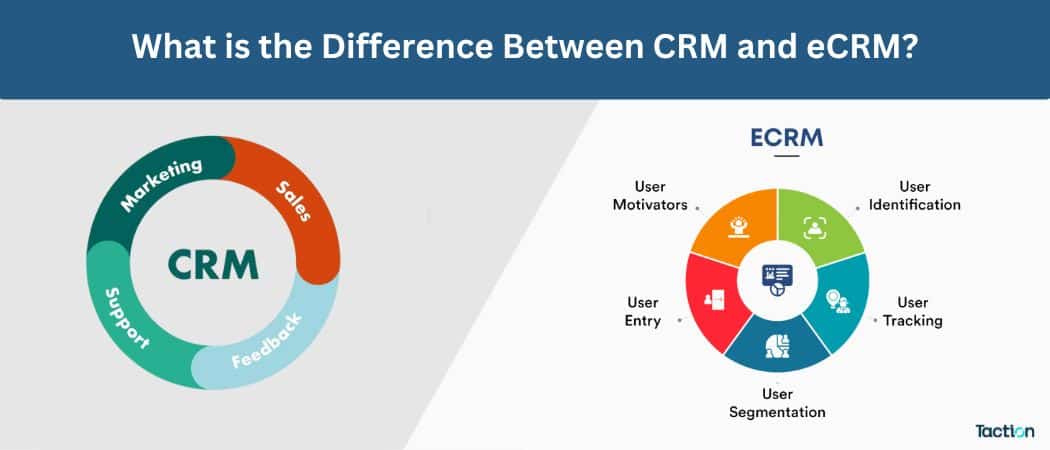
Custom software brings clarity and structure to operations. It eliminates repetitive tasks with automation, ensures every team works off the same source of truth, and enables decision-makers to see the complete business picture instantly. Marketing gets better customer insights. Sales gets faster lead flow. Support gets unified ticketing and communication. Operations get automated pipelines. Leadership gets accurate dashboards and forecasting.
Because the system is built for your exact needs, employees adapt to it naturally. There is no confusion, no unnecessary steps, no buying extra modules you will never use. Everything is purposeful.
Most importantly, custom-built software aligns technology with your long-term business strategy—not with what a vendor believes you should use.
What Modern Businesses Need in a Custom Software Product
Today’s digital ecosystems are complex. To stay competitive, custom software must include:
1. Cloud-Native Architecture
Scalable, reliable, and cost-efficient for enterprise operations.
2. Strong UX/UI
User experience directly impacts adoption and productivity.
3. AI-Driven Capabilities
Predictive analytics, intelligent automation, chatbot systems, sentiment analysis, and smart decision-making.
4. Secure Backend Engineering
Encryption, access control, audit logs, compliance mapping.
5. Automation Workflows
Eliminate manual tasks across sales, operations, HR, logistics, and service lines.
6. Integration Ecosystem
Your software must communicate flawlessly with other platforms.
7. Real-Time Analytics & Dashboards
Data should guide every business decision.
These capabilities lay the foundation for operational excellence.
The Complete Process of Custom Software Product Development
Here is the modern product development journey—written in your preferred editorial flow.
Discovery & Requirement Mapping
This phase identifies your business needs, pain points, workflows, customer expectations, compliance requirements, and future scalability goals. It becomes the blueprint for your custom product.
UX/UI Strategy
User journeys, wireframes, prototypes, and interface designs give you a visual representation before development begins.
Architecture & Engineering
Choosing the right tech stack (Node.js, Python, React, Flutter, AWS, Azure, MongoDB, SQL, microservices, AI models) ensures the system is future-proof.
Backend & Frontend Development
Teams build modules that support core operations, user-facing components, and real-time interactions.
Integrations
CRMs, ERPs, EHRs, AI systems, payment gateways, analytics platforms, communication APIs—everything must connect smoothly.
Quality Assurance & Security Testing
Your product undergoes functional, performance, API, security, penetration, and compliance testing.
Deployment
Your software goes live across cloud environments with CI/CD pipelines.
Maintenance, Upgrades & Scaling
A true software development service doesn’t end at launch—it continues with improvements, support, monitoring, and long-term optimization.
This lifecycle ensures the product evolves with your business—not behind it.
Request a Detailed BIM Development Cost Estimate
How Much Does Custom Software Product Development Cost?
Realistic U.S. market ranges:
Basic internal tools
$25,000 – $60,000
Mid-level operational systems
$80,000 – $180,000
Enterprise SaaS or business platforms
$200,000 – $500,000+
AI-powered or industry-regulated systems
$300,000 – $1M+
Cost depends on complexity, integrations, compliance, number of user roles, AI models, cloud infrastructure, and long-term scale.
Why Partnering With the Right Software Development Service Provider Matters
Custom software is only as good as the team that builds it.
At Taction Software, we specialize in:
Custom software development
Enterprise-grade architecture
HIPAA-compliant healthcare systems
AI & automation solutions
SaaS product development
CRM & ERP development
Mobile & web platforms
Cloud transformations
With 20+ years of experience, U.S.-focused engineering, and deep industry understanding, we build products that improve workflows, strengthen security, and accelerate business growth.
If your organization is ready for scalable, intelligent, high-performance digital transformation—custom software is the path forward.
FAQs
It is the process of designing, engineering, and deploying software built specifically for a business’s workflows, goals, industry requirements, and long-term scalability.
Custom solutions align perfectly with your processes, integrate seamlessly, improve efficiency, reduce long-term costs, and support competitive differentiation.
Depending on complexity, it can take 8 weeks to 12 months for complete development, testing, deployment, and optimization.
Costs range from $25,000 to $500,000+, depending on features, integrations, compliance needs, AI components, and cloud architecture.
Yes. Modern custom software uses API-driven, cloud-native architecture that integrates with CRMs, ERPs, EHRs, payment systems, analytics tools, and AI services.