

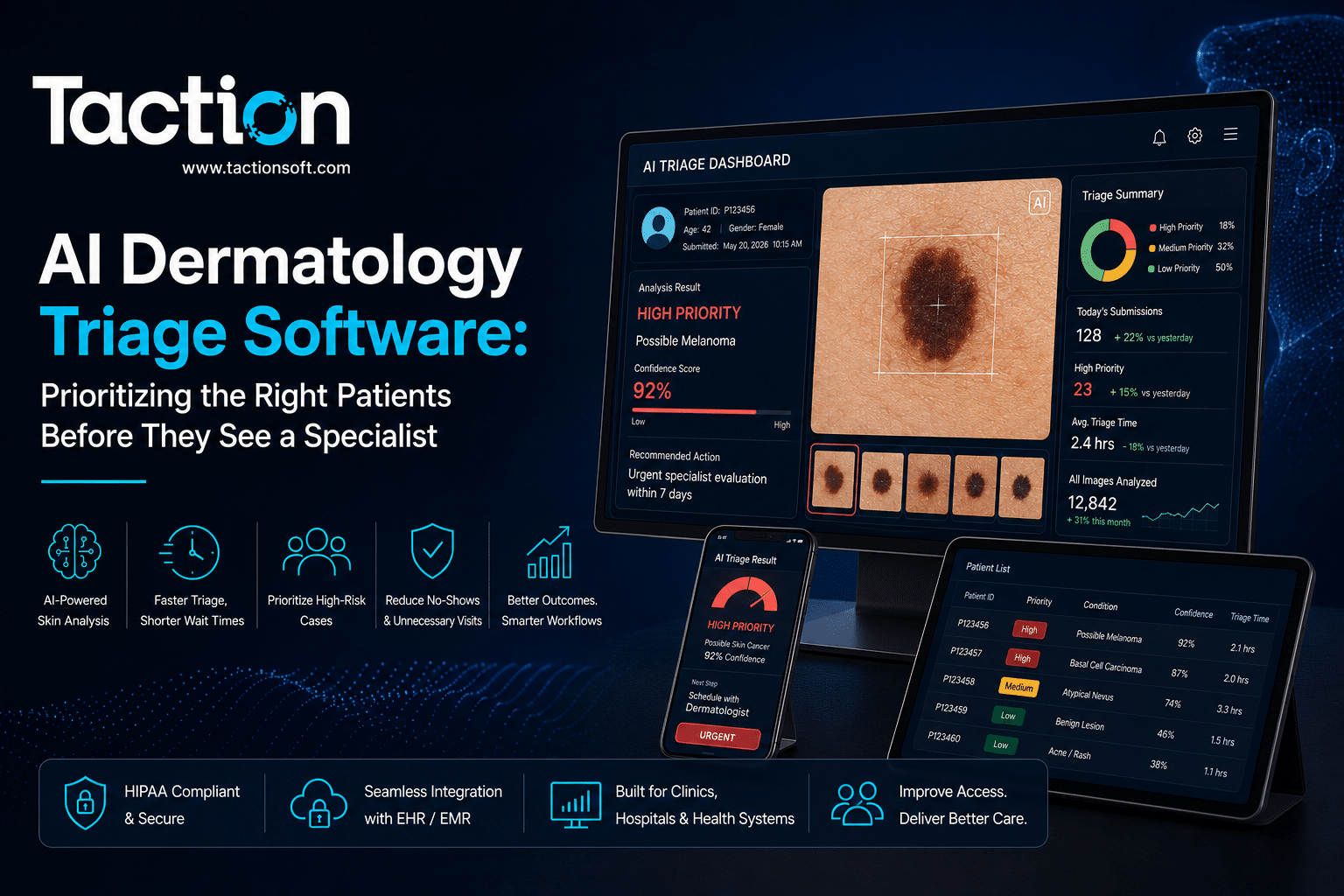
AI dermatology triage software analyzes skin lesion images submitted before a specialist visit and helps route patients to the appropriate level of urgency, flagging concerning lesions for expedited review while directing lower-risk cases toward routine scheduling. Dermatology has some of the longest specialist wait times in medicine, often measured in months rather than weeks, and the clinical risk in that delay is concentrated in a small subset of cases that genuinely need faster attention, which is exactly the sorting problem triage software is built to solve. This page distinguishes triage from diagnosis, covers how image-based triage models work, where it fits into teledermatology and referral workflows, and what to check before adopting a system.
Triage Versus Diagnosis: A Critical Distinction
The single most important thing to understand about this category of software is what it is not designed to do.
What Triage Software Actually Determines
Triage software does not provide a definitive diagnosis. It assesses submitted images and clinical context to estimate urgency, whether a lesion has features concerning enough to warrant expedited specialist review, rather than confirming what the lesion actually is. This distinction matters both clinically and from a liability standpoint, and any vendor or internal build should be explicit about which function the software performs.
Why the Distinction Matters for Deployment
A triage tool that gets miscast internally as a diagnostic tool creates real risk, both because staff may over-rely on its output and because the regulatory pathway and validation standard for triage software differs meaningfully from a diagnostic classification tool. Clear internal messaging about what the software does and does not do should be part of any rollout plan.
How Image-Based Dermatology Triage Works
Most triage systems combine image analysis with structured clinical intake data to generate an urgency assessment.
Lesion Image Analysis
Patients or referring clinicians submit one or more images of the lesion in question, often alongside a brief description of duration, change over time, and symptoms. The AI model analyzes visual features associated with malignancy risk, asymmetry, border irregularity, color variation, and diameter, patterns closely related to the ABCDE criteria dermatologists already use clinically.
Combining Image Data With Patient History
The strongest triage systems incorporate structured intake questions alongside the image, patient age, personal or family history of skin cancer, whether the lesion has changed recently, since these clinical factors materially affect urgency independent of what the image alone shows.
Where Triage Fits Into Referral and Teledermatology Workflows
Dermatology triage is most useful at the front door of the referral process, before a patient has even been scheduled for a visit.
Primary Care Referral Triage
When a primary care physician identifies a suspicious lesion, submitting an image through a triage system at referral time helps the receiving dermatology practice prioritize that referral appropriately in its scheduling queue, rather than treating every referral with the same default wait time regardless of clinical urgency.
Integration With Teledermatology Programs
Triage software often sits directly upstream of a full teledermatology consult, filtering and prioritizing incoming cases before they reach the reviewing dermatologist. This connects directly to the broader remote dermatology care model covered in our work on teledermatology platform development, where triage accuracy directly affects how efficiently the whole remote consult pipeline runs.
Patient-Facing Symptom Checkers Versus Clinical Triage Tools
It is worth distinguishing consumer-facing skin symptom checker apps from clinical triage tools deployed within a health system’s referral workflow. The clinical validation bar, data privacy requirements, and intended use are meaningfully different between the two categories, even when the underlying computer vision technology looks similar on the surface.
Evaluating a Triage System Before Adoption
Health systems considering dermatology triage software should look closely at both the training data and the intended clinical use case before deploying.
Training Data Diversity Across Skin Tones
AI dermatology models have historically been trained on datasets skewed toward lighter skin tones, which has led to documented accuracy gaps for darker skin tones where lesion presentation can differ visually. Ask vendors directly about the skin tone diversity of their training and validation data before adopting a system for a diverse patient population.
Regulatory Clearance and Intended Use Statement
Confirm the specific FDA clearance or regulatory status of the software, and make sure the intended use statement matches triage rather than diagnosis, since using a triage-cleared tool as if it were diagnostically validated creates both clinical and compliance exposure.
Key Takeaways
AI dermatology triage software helps prioritize specialist referrals by assessing urgency from lesion images and structured clinical history, but it is explicitly not a diagnostic tool, and treating it as one creates real clinical risk. The strongest deployments sit at the referral or teledermatology intake point, and any evaluation should specifically confirm training data diversity across skin tones given documented historical gaps in this area. If your organization is exploring dermatology triage as part of a broader referral or teledermatology strategy, talk to our team about your current referral volume and workflow.
Frequently Asked Questions
Does AI dermatology triage software diagnose skin cancer?
No. Triage software assesses urgency to help prioritize specialist review, it does not provide a diagnosis. A dermatologist or qualified clinician makes the actual diagnostic determination.
How accurate is AI dermatology triage across different skin tones?
Historically, many dermatology AI models have shown accuracy gaps for darker skin tones due to training data skewed toward lighter skin representation. This is an important question to ask any vendor directly before adoption.
Where does dermatology triage software fit in the referral process?
It is most commonly used at the point of primary care referral or at the front end of a teledermatology program, helping prioritize which cases get expedited specialist review versus routine scheduling.
Is dermatology triage software the same as a consumer skin symptom checker app?
No. Clinical triage tools deployed within a health system’s referral workflow are held to different validation, privacy, and intended use standards than consumer-facing symptom checker apps, even when the underlying computer vision approach is similar.
What should we ask vendors before adopting dermatology triage software?
Ask about training data diversity across skin tones, the specific regulatory clearance and intended use statement, and how the tool integrates with your existing referral or teledermatology workflow before committing to a system.